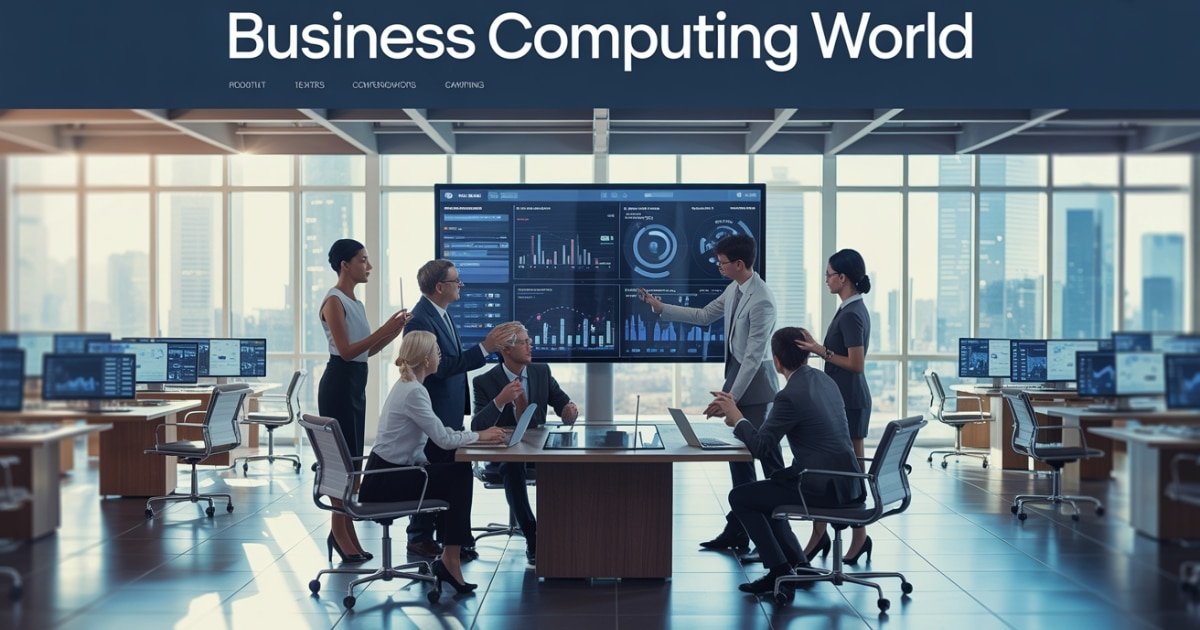
Business Computing World: How Technology Continues to Shape Modern Enterprises

Introduction to the Business Computing World
Business Computing World The business computing world has evolved dramatically over the past few decades, transforming from simple data-processing systems into complex digital ecosystems that power nearly every aspect of modern organizations. Today, computing is no longer just a support function; it sits at the very core of business strategy, decision-making, and competitive advantage. Whether it’s a startup operating from a single laptop or a multinational corporation managing global operations, computing technologies play a critical role.
What makes the business computing world particularly fascinating is how rapidly it adapts to changing needs. Businesses no longer rely solely on on-premise servers or standalone software. Instead, cloud platforms, mobile technologies, artificial intelligence, and real-time data analytics have become standard tools. These innovations enable organizations to operate faster, smarter, and more efficiently than ever before.
From finance and healthcare to retail and manufacturing, the influence of computing is universal. Understanding how the business computing world functions—and where it is headed—helps leaders make informed decisions, reduce risks, and uncover new opportunities. In many ways, mastering business computing has become synonymous with mastering modern business itself.
The Core Components of the Business Computing World

At the heart of the business computing world are several foundational components that work together to support organizational operations. Hardware remains a key element, including servers, workstations, networking devices, and mobile equipment. While hardware may seem less glamorous than software, reliable infrastructure is essential for maintaining uptime and performance.
Software forms the second major pillar, encompassing operating systems, enterprise applications, customer relationship management (CRM) tools, and enterprise resource planning (ERP) systems. These applications automate processes, store valuable data, and streamline workflows across departments. Without them, businesses would struggle to scale or maintain consistency in their operations.
The third critical component is networking and connectivity. High-speed internet, secure internal networks, and cloud connectivity allow businesses to operate across locations and time zones. In the modern business computing world, seamless communication between systems and people is not optional—it is a requirement for survival and growth.
Cloud Computing and Its Impact on Modern Businesses
Cloud computing has arguably been the most disruptive force in the business computing world over the past decade. Instead of investing heavily in physical infrastructure, companies can now rent computing power, storage, and software on demand. This shift has significantly lowered entry barriers for small and medium-sized businesses.
One of the biggest advantages of cloud computing is scalability. Businesses can increase or decrease resources based on real-time needs, ensuring they only pay for what they use. This flexibility allows organizations to respond quickly to market changes, seasonal demand, or unexpected growth without major capital expenses.
Additionally, cloud platforms enhance collaboration and accessibility. Employees can work from anywhere, access files securely, and collaborate in real time. This has redefined workplace norms and made remote and hybrid work models viable across industries. As a result, cloud computing has become a cornerstone of the modern business computing world.
Cybersecurity in the Business Computing World
As technology advances, so do the risks associated with it. Cybersecurity has become one of the most critical concerns in the business computing world. With businesses storing vast amounts of sensitive data—including customer information, financial records, and intellectual property—the cost of a security breach can be devastating.
Cyber threats now extend far beyond simple viruses. Ransomware attacks, phishing campaigns, insider threats, and advanced persistent threats are increasingly common. Businesses must adopt multi-layered security strategies that include firewalls, encryption, access controls, and employee training.
Importantly, cybersecurity is no longer just an IT issue; it is a business priority. Executives and board members are now actively involved in security planning and risk management. In the modern business computing world, trust and reputation are closely tied to how well an organization protects its digital assets.
Data Analytics and Business Intelligence
Data has become one of the most valuable resources in the business computing world. Organizations generate massive amounts of data every day through transactions, customer interactions, and operational processes. The challenge lies not in collecting data, but in transforming it into actionable insights.
Business intelligence tools and data analytics platforms help organizations analyze trends, identify inefficiencies, and predict future outcomes. These tools empower decision-makers with real-time dashboards, visual reports, and predictive models that support strategic planning.
When used effectively, data analytics creates a competitive advantage. Companies can personalize customer experiences, optimize supply chains, and identify new revenue opportunities. In today’s business computing world, data-driven decision-making is no longer optional—it is the standard for successful organizations.
Artificial Intelligence and Automation in Business Computing
Artificial intelligence (AI) and automation are redefining what is possible in the business computing world. From chatbots handling customer support to machine learning algorithms detecting fraud, AI-powered systems are enhancing efficiency and accuracy across industries.
Automation reduces the burden of repetitive tasks, allowing employees to focus on higher-value activities. This not only improves productivity but also increases job satisfaction and innovation. In areas such as accounting, human resources, and logistics, automation has become a strategic advantage.
As AI technologies continue to mature, their role in the business computing world will only expand. Businesses that embrace AI responsibly and strategically are better positioned to adapt, innovate, and stay ahead of competitors in an increasingly digital economy.
The Role of IT Leadership in the Business Computing World
Strong leadership is essential for navigating the complexities of the business computing world. Chief Information Officers (CIOs), Chief Technology Officers (CTOs), and IT managers play a vital role in aligning technology initiatives with business goals.
These leaders must balance innovation with stability, ensuring systems remain secure and reliable while adopting new technologies. They also serve as bridges between technical teams and business stakeholders, translating complex concepts into actionable strategies.
Effective IT leadership fosters a culture of continuous improvement and digital literacy. In the modern business computing world, technology decisions are strategic decisions, and strong leadership ensures those decisions drive long-term success.
Future Trends Shaping the Business Computing World
Looking ahead, the business computing world is set to undergo even more dramatic changes. Emerging technologies such as edge computing, quantum computing, and advanced AI models promise to push boundaries further. While some of these technologies are still in early stages, their potential impact is significant.
Sustainability is also becoming a key focus. Businesses are increasingly evaluating the environmental impact of their computing operations, from energy-efficient data centers to greener cloud solutions. Sustainable computing practices are expected to become a standard expectation rather than a niche concern.
Ultimately, adaptability will define success in the future business computing world. Organizations that stay informed, invest wisely, and embrace change will continue to thrive, while those that resist technological evolution risk falling behind.
Conclusion: Why the Business Computing World Matters More Than Ever
The business computing world is no longer a background function—it is the engine that drives modern organizations forward. From cloud computing and cybersecurity to AI and data analytics, technology influences every decision, process, and customer interaction.
Businesses that understand and leverage computing effectively gain a powerful advantage in efficiency, innovation, and resilience. At the same time, the increasing complexity of technology requires thoughtful leadership, continuous learning, and strategic investment.
As the digital landscape continues to evolve, one thing remains clear: success in today’s economy is deeply connected to success in the business computing world. Organizations that embrace this reality are better prepared to face challenges, seize opportunities, and build sustainable growth for the future.
